
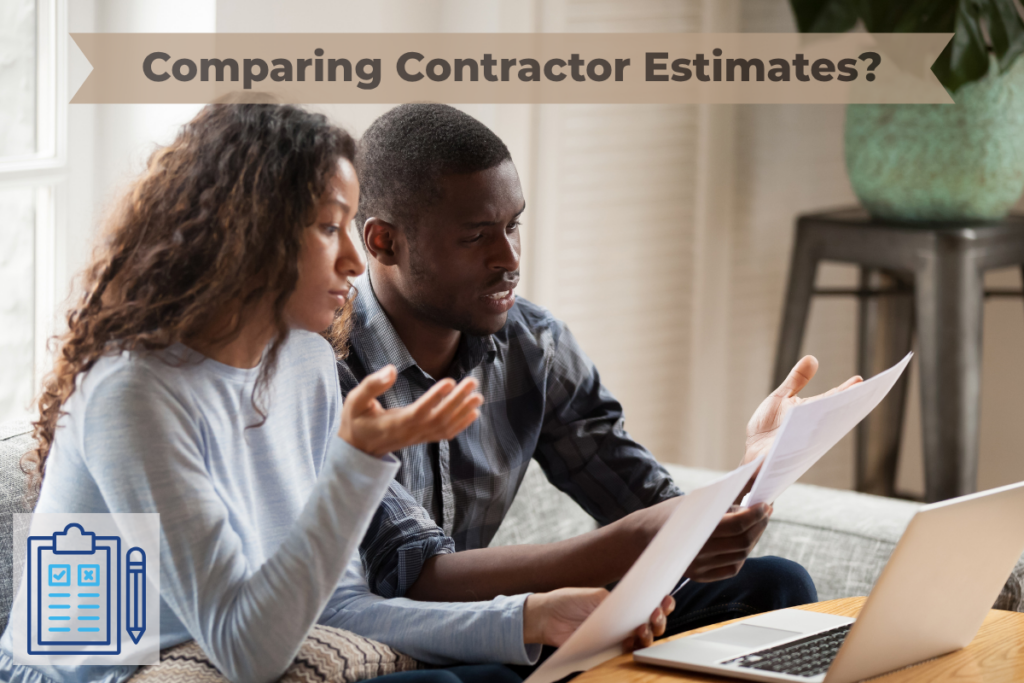
How to Compare Contractor Estimates the Right Way
Many homeowners assume comparing bids is easy. They line up the prices, look at the bottom number, and lean toward the one that looks like the best deal. The problem is that how to compare contractor estimates the right way has very little to do with price alone. What matters most is understanding what is actually included, what is left out, and how each contractor plans to do the job.
A low number can look attractive at first, but it does not always mean better value. In some cases, it simply means the estimate leaves out important work, uses lower-grade materials, or skips steps that matter. A clear, detailed estimate often tells you more about the contractor than the price itself.
The first thing to review is whether each estimate is pricing the same job. This is where many homeowners get off track.
One contractor may be pricing a full repair while another is only pricing part of the problem. One may include tear-out, disposal, prep, and cleanup, while another only includes installation. If the scope is different, the price will be different too, and those numbers are not truly comparable.
Read each estimate carefully. Look for details about what will be done, what areas are included, and what the finished result is supposed to be. If one estimate is vague and another is specific, that tells you something right away. Clear scope usually means clearer expectations once the project starts.
The next step is to compare materials. Two contractors may both say they are pricing the same type of project, but the materials may be completely different.
One estimate may include a basic product, while another includes a higher-quality system with stronger warranty coverage or longer life. That can apply to roofing, siding, windows, flooring, cabinets, trim, paint, and almost anything else used in home improvement work.
Ask for specifics when needed. Brand names, product lines, thickness, grade, finish level, and warranty terms all matter. If one estimate is higher because it includes better materials, that is not automatically a bad thing. The key is to know what you are paying for so you can compare value fairly.
Good work usually starts with good prep. This is one of the easiest places for an estimate to look cheaper on paper while leaving out steps that affect the final result.
For interior work, prep may include protecting floors, furniture, and nearby finishes. For exterior work, it may include proper removal, surface prep, site protection, and cleanup. On many jobs, the prep work is what helps the finished project last and look right.
If an estimate is thin on prep details, ask questions. Does it include protection of your home and property? Does it include cleanup each day or only at the end? Does it include disposal of old materials? A contractor who plans carefully will usually spell these things out or explain them clearly when asked.
- Compare the scope of work
The first thing to review is whether each estimate is pricing the same job. This is where many homeowners get off track.
One contractor may be pricing a full repair while another is only pricing part of the problem. One may include tear-out, disposal, prep, and cleanup, while another only includes installation. If the scope is different, the price will be different too, and those numbers are not truly comparable.
Read each estimate carefully. Look for details about what will be done, what areas are included, and what the finished result is supposed to be. If one estimate is vague and another is specific, that tells you something right away. Clear scope usually means clearer expectations once the project starts.
- Look closely at materials
The next step is to compare materials. Two contractors may both say they are pricing the same type of project, but the materials may be completely different.
One estimate may include a basic product, while another includes a higher-quality system with stronger warranty coverage or longer life. That can apply to roofing, siding, windows, flooring, cabinets, trim, paint, and almost anything else used in home improvement work.
Ask for specifics when needed. Brand names, product lines, thickness, grade, finish level, and warranty terms all matter. If one estimate is higher because it includes better materials, that is not automatically a bad thing. The key is to know what you are paying for so you can compare value fairly.
- Compare prep work and job protection
Good work usually starts with good prep. This is one of the easiest places for an estimate to look cheaper on paper while leaving out steps that affect the final result.
For interior work, prep may include protecting floors, furniture, and nearby finishes. For exterior work, it may include proper removal, surface prep, site protection, and cleanup. On many jobs, the prep work is what helps the finished project last and look right.
If an estimate is thin on prep details, ask questions. Does it include protection of your home and property? Does it include cleanup each day or only at the end? Does it include disposal of old materials? A contractor who plans carefully will usually spell these things out or explain them clearly when asked.
Pay attention to missing details
One of the biggest mistakes homeowners make is assuming that anything important must already be included. That is not always the case.
Some estimates are short because the contractor is trying to keep things simple. Others are short because they leave room for extra charges later. If something matters to you, it should be discussed and, when appropriate, written into the estimate. Look for missing information about permits, material allowances, finish details, protection, cleanup, timeline, and warranty. If you do not see those items, ask. Missing details are not always a red flag, but they should never be ignored.
How to compare contractor estimates the right way when change orders come up
Most homeowners hope the original estimate will cover everything. Sometimes it does. Sometimes it cannot.
Once a project starts, hidden conditions may show up. That can include water damage, rot, outdated wiring, structural issues, or other problems no one could fully confirm before opening things up. A good contractor should explain how those situations are handled.
That is where change orders come in. A professional contractor should have a clear process for documenting extra work and pricing it before moving forward. That is not a sign they are planning to overcharge you. In many cases, it is a sign they are being honest about the reality of renovation work. The important part is that changes should be explained clearly and approved before the work is added.

Do not judge value by price alone
The goal is not to find the lowest number. The goal is to understand what you are buying.
A low estimate may end up costing more if it leaves out work, uses lower-quality materials, or creates confusion during the project. A higher estimate may include stronger prep, better products, clearer communication, and a more complete scope. That does not mean the highest price is always best either. It means the numbers only make sense when you know what is behind them.
When you compare estimates the right way, you are really comparing completeness, clarity, and professionalism. Those things matter just as much as the price.
Final thoughts
A contractor estimate should help you understand the job, not leave you guessing. The best estimates usually make it easier to see what is included, what assumptions are being made, and how the contractor plans to carry the project from start to finish.
Take the time to review scope, materials, prep, change order process, timeline, and communication. Ask questions where things are unclear. A clear, thorough estimate is often worth far more than a low number that leaves room for confusion, disappointment, or extra costs later.


