
Home Addition Planning in Urbana MD: Should You Add or Rework?
Home addition planning in Urbana MD often starts with one big question: should you build more space, or rework the home you already have? For many homeowners, the answer depends on the layout, budget, lot conditions, family needs, and long-term plans for the property. This guide explains when a home addition makes sense, when remodeling the existing floor plan may be smarter, and how to make a confident decision before starting design or construction.
Home Addition Planning in Urbana MD Starts with the Right Question
The first question is not always, “How big should the addition be?” A better starting point is, “Do we need more square footage, or do we need to use our current space better?”
That distinction matters. Some homes need a true addition. Others may benefit from a smarter layout, improved circulation, better storage, or opening up underused areas. Before committing to either direction, homeowners should understand what each choice can solve and where each option has limits.
During home addition planning in Urbana MD, the goal is not simply to add square footage. The goal is to create a layout that improves daily life, protects the home’s value, and fits the property’s structural and zoning conditions.
Proper Home Addition Planning Leads to More Space
Home addition planning in Urbana MD usually starts with one clear question: can the existing footprint support the way your family needs to live, or does the home truly need more space? For many homeowners, an addition makes sense when a growing family needs another bedroom, a larger kitchen, a more functional gathering space, or a room that simply does not exist in the current layout.
A home addition can also support long-term livability. For homeowners in Urbana who want to stay in the neighborhood, adding space may be a practical way to adapt the home instead of starting over somewhere else.
The key is making sure the new space connects naturally to the existing home. Poor planning can lead to awkward transitions, strange traffic patterns, or exterior details that feel mismatched. Good home addition planning looks at both the new space and how it affects the rest of the house.
Reworking the Existing Footprint
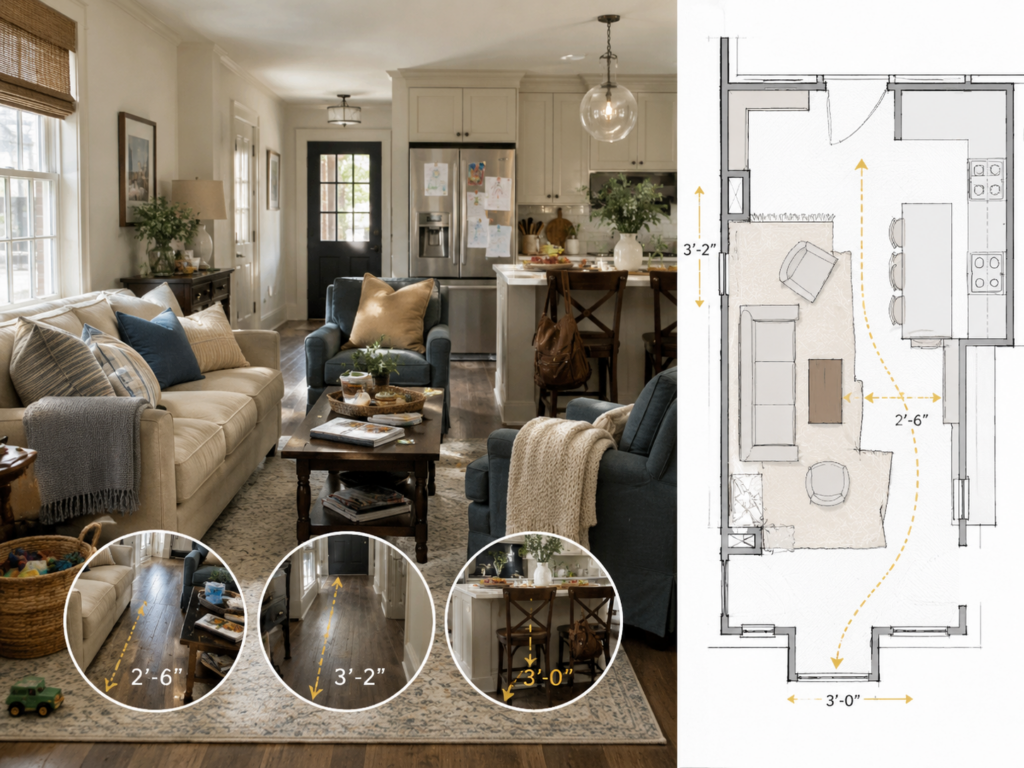
Not every cramped home needs more square footage. Sometimes the issue is how the current space is arranged.
For example, a home may have a formal room that is rarely used, a kitchen that does not connect well to nearby living areas, or storage that is spread out in inconvenient places. In those situations, improving the existing footprint may create a better everyday experience without expanding the home.
This is where honest evaluation matters. If the problem is poor flow, a better layout may help. If the problem is that there is no room for the function your family needs, an addition may be the stronger answer.
Homeowners often assume an addition is the only solution because the house feels too small. But “too small” can mean different things. It may mean not enough rooms, not enough open living space, not enough storage, or not enough flexibility. Each problem points toward a different solution.
Include the Whole Home
One common mistake in home addition planning in Urbana MD is treating the new space as if it exists separately from the rest of the home. A successful addition should feel connected to the original structure, both visually and functionally.
That means looking at how people will move through the house, where natural light enters, how the exterior will be affected, and whether the new space improves or complicates daily life. The addition should solve a problem without creating new ones.
Structural planning may also be needed, especially when walls, rooflines, foundations, or major openings are involved. If drawings or structural planning are part of the project, Chesapeake Design Company may be relevant as part of the planning conversation.
This early planning stage is also the right time to discuss priorities. Some homeowners care most about gathering space. Others need privacy, storage, or a better connection between rooms. Clear priorities help prevent the project from becoming larger or more complicated than necessary.
What Homeowners Often Do Not Realize
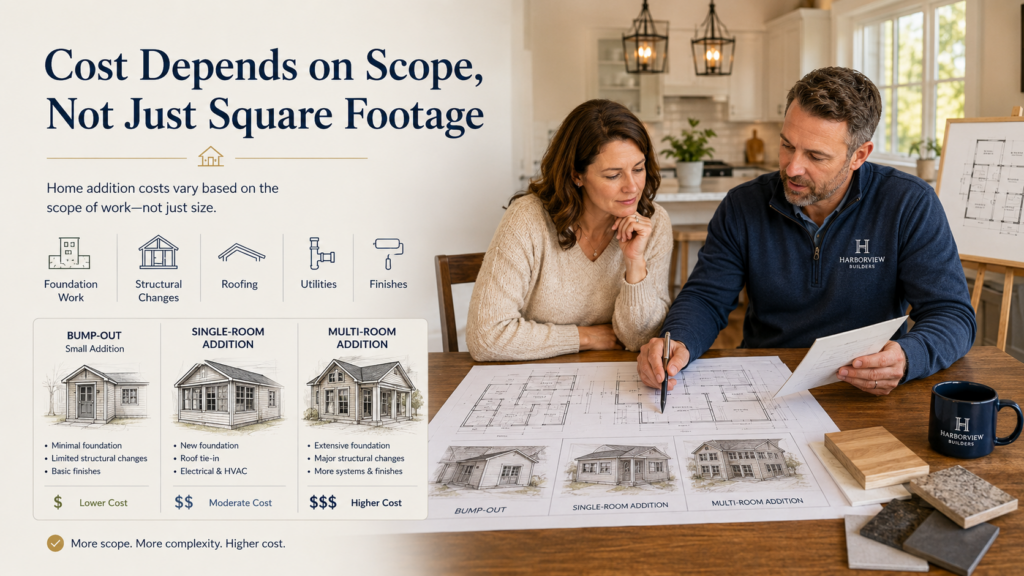
Many homeowners think the decision is mainly about cost. Cost matters, but it is not the only factor. Disruption, property limitations, structural needs, exterior matching, and long-term usability also matter.
An addition may involve foundation work, roofing, siding, windows, and interior finish work. Reworking the existing footprint may involve layout changes, mechanical adjustments, and finish updates. Both paths require planning, but they affect the home differently.
The best choice is usually the one that solves the real problem most directly. If the home needs a function it does not currently have, an addition may be worth exploring. If the home has enough space but uses it poorly, interior changes may be the better first conversation.
What to Expect During the Early Planning Process
Making the Best Home Addition Planning Decision
Home addition planning in Urbana MD should come back to one practical question: what will make the home work better for the way your family actually lives?
If expanding the home gives you the missing space you need, a well-planned addition may be the right direction. If the issue is flow, storage, or underused rooms, reworking the existing footprint may solve the problem more efficiently.
Either way, the decision should be based on the home, the property, the structure, and your long-term goals. A free in-home estimate can help you compare the options with more clarity before committing to a direction.
If your Urbana home no longer feels like it supports everyday life, schedule a free in-home estimate with Merrell Building to talk through whether an addition or a smarter use of your current footprint makes the most sense.
Frequently Asked Questions (FAQ's)
- How do I know if my Urbana home needs an addition or a redesign?
Start by identifying the real source of the problem. If your home has enough square footage but poor flow, storage, or room placement, a redesign may help. If the home is missing an essential function, such as a larger family area or dedicated living space, an addition may be more appropriate. - Is it usually better to build out or reconfigure existing space?
It depends on the home, lot, structure, and how your family uses the space. Reconfiguring existing rooms may be less complex in some cases, but it cannot always solve a true square-footage problem. - What should homeowners plan for before starting a home addition?
Homeowners should think through the purpose of the added space, how it connects to the existing home, structural needs, exterior matching, and how the project may affect daily routines during construction. - Can a home addition improve long-term functionality without changing the character of the home?
Yes, when it is planned carefully. The goal should be to make the new space feel like a natural part of the home instead of something that was simply attached later. - How early should I involve a contractor when considering an addition?
It is wise to involve a contractor early, before you get too attached to one layout idea. An early in-home conversation can help clarify what is realistic, what needs more planning, and whether an addition is truly the right path.


