
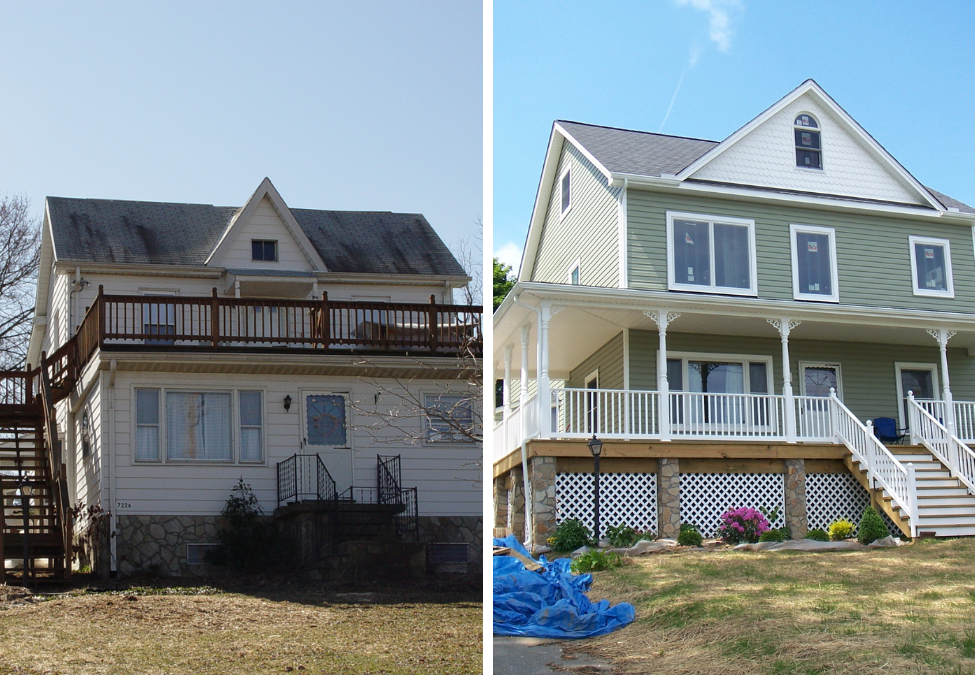
Home Addition vs Moving in Columbia MD: What Should You Do?
If your home in Columbia no longer fits your space needs, you’re likely facing one question: should you move, or build an addition?
It sounds like a straightforward decision, but it rarely is. The right answer depends less on surface-level cost comparisons and more on how your current home works, what kind of space you actually need, and how you want to live going forward.
What Most Homeowners Overlook
It’s not just about square footage
More space doesn’t fix the problem if the layout still doesn’t work. Likewise, moving to a larger home doesn’t guarantee better functionality if the design still doesn’t fit your lifestyle.
The real question is: what isn’t working right now?
Your current layout matters more than you think
Before deciding anything, it’s important to look at how your home functions today. Sometimes, a well-planned addition can solve multiple issues at once—improving flow, adding usable space, and making the entire home feel more comfortable.
Other times, the limitations of the existing structure make that more difficult, which can shift the decision toward moving.
It usually comes down to this:
Moving may be the better option if:
- The current layout cannot be improved without major structural changes
- The lot size limits expansion
- You’re already considering a major lifestyle change (schools, commute, etc.)
- The type of space you need doesn’t fit well with your current home
In these cases, trying to force an addition may create more complexity than value.
A home addition often makes more sense when:
- You like your neighborhood and location in Columbia
- The home has a solid structure and layout that can be expanded
- You need targeted space improvements (family room, primary suite, etc.)
- You want to improve how the home functions, not just make it bigger
Many homeowners find that staying and improving their existing home gives them more control over the outcome. Instead of adapting to a new space, you’re shaping one that fits your needs.
If you’re exploring options, it helps to understand the different types of home additions available and how they can solve specific problems.
What to Expect If You Choose an Addition
A home addition is not just about construction—it starts with understanding your space and goals clearly.
Typically, the process begins with a conversation to understand what’s not working and what you’re trying to achieve. From there, an in-home meeting helps evaluate the structure, layout, and possibilities.
After that, you’ll receive an estimate that outlines the scope of the project. In some cases, especially for more complex additions, a design phase is needed before moving into construction.
During construction, communication matters. You’ll know what to expect, and any changes are addressed before moving forward.
Frequently Asked Questions (FAQ)
- How do I know if an addition is better than moving?
It depends on whether your current home can realistically be improved to meet your needs. If layout and structure allow for it, an addition is often worth considering. - Is adding onto my home more cost-effective than buying a new one?
It can be, but cost alone shouldn’t drive the decision. Function, location, and long-term fit matter just as much. - What types of additions are most common in Columbia homes?
Family room additions, primary suite expansions, and kitchen-related additions are common, depending on space needs. - How disruptive is a home addition project?
There will be some disruption, but good planning and communication help keep the process manageable. - Will a home addition increase my home’s long-term value?
In many cases, yes—especially when the addition improves how the home functions and aligns with what buyers typically look for.
If you’re still unsure, that’s completely normal, but talking through your specific situation is often what makes the decision clear.


